"XOCO, ethical and sustainable chocolate"
Broadcast on Saturday 31 October 2026. Bientôt à Table. RTBF. Episode recorded in French.
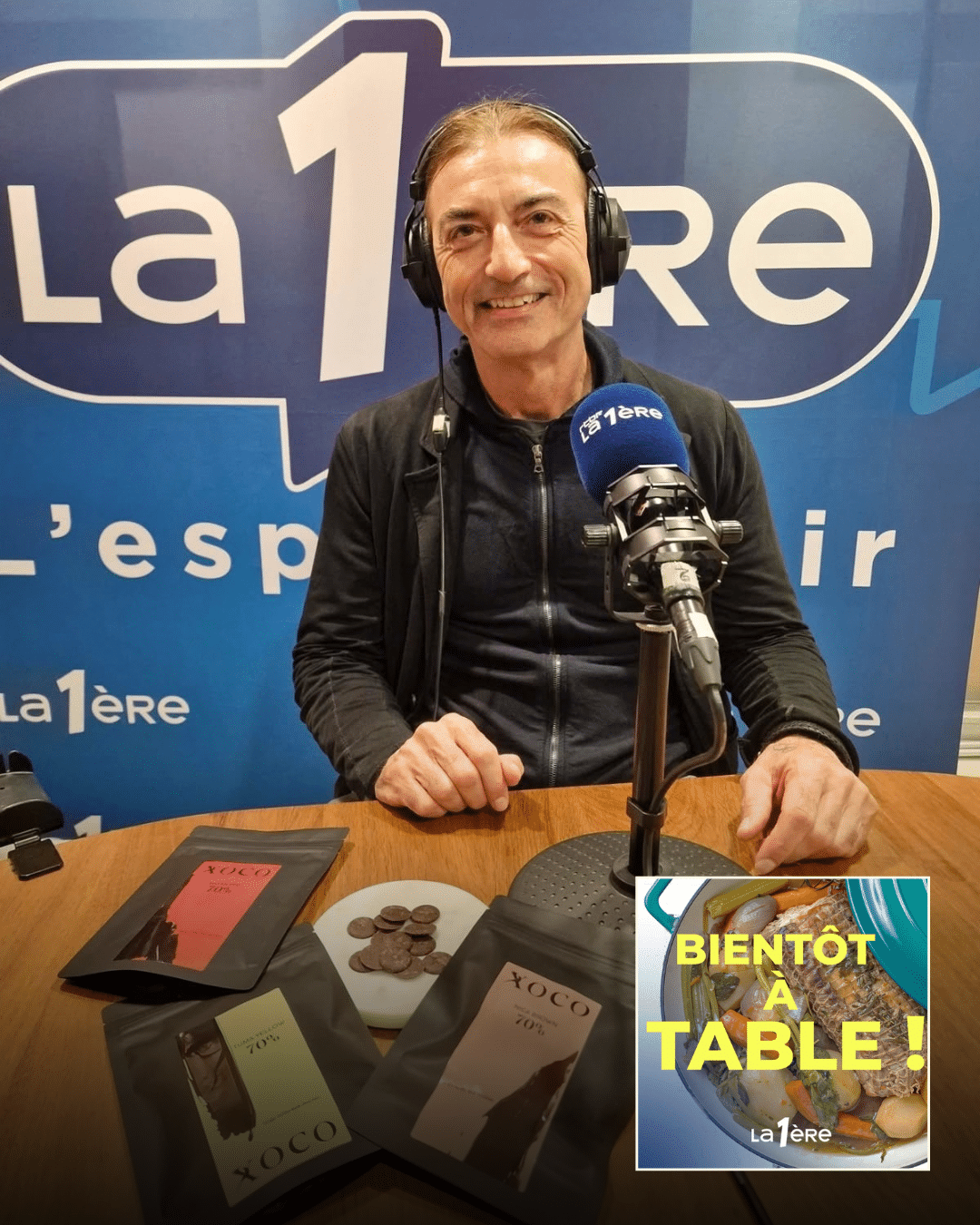
On October 31, Frank Homann, founder of XOCO, was the guest of Sophie Moens and Carlo De Pascale on Bientôt à table, the food programme of La Première on RTBF.
In 18 minutes, he tells the story of the bet he made in 2007: to stop treating cacao as a mere commodity and start treating it as a fruit, whose genetics, cultivation, fermentation and flavour can all be worked on. At the heart of this bet lies grafting, a technique inherited from the Romans that had never before been applied to cacao for its flavour. Without grafting, there are no varieties: grafting is what gave birth to our three cacao varieties, Mayan Red, Tuma Yellow and Nica Brown.
Cacao is sold as if it was oil
Today, most of the world’s cacao is traded at a single price, quoted every day on the New York and London exchanges. “Cacao is treated as a commodity. You don’t see apples or grapes quoted that way,” Frank Homann points out. In an industry built on flavour, every cacao is paid as if it were identical.
For producers, the consequence is direct: they are price-takers rather than price-setters. They cannot save, invest or pay for an education.
“How can someone pay a high price for a chocolate dessert in a three-star restaurant while the people who produced that cacao live in poverty?“
The cacao tree is a fruit tree
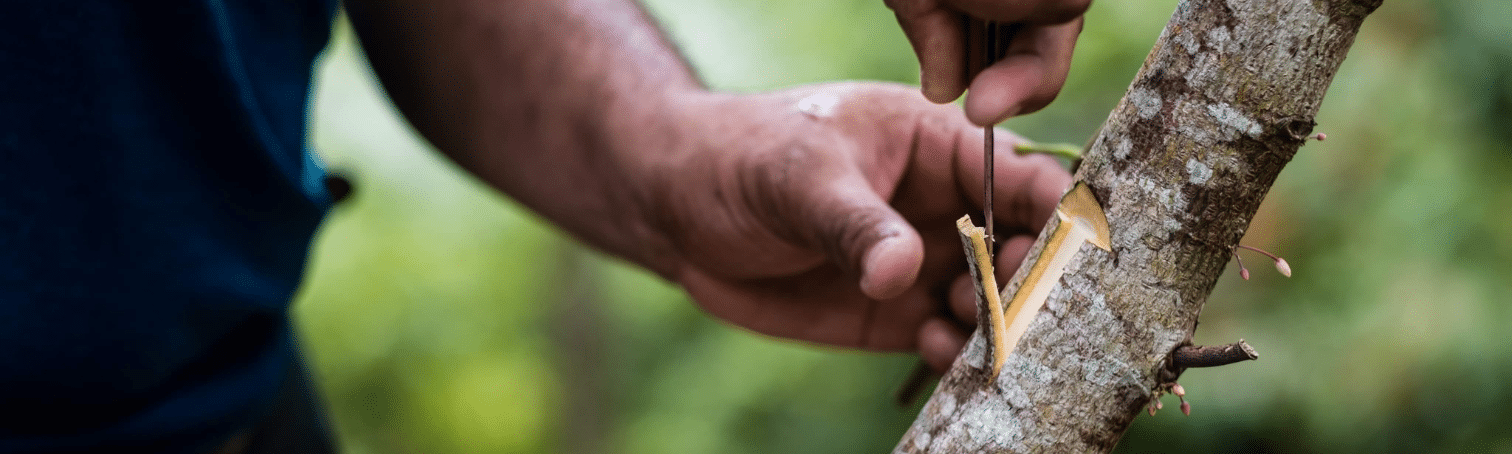
XOCO’s answer lies in a 2,000-year-old technique: grafting. Frank Homann takes the example of the apple. Planted from a pip, it gives small, sour, bitter fruit. Grafted from a chosen tree, it becomes a variety: Granny Smith or Golden Delicious always taste the same, because flavour is genetically determined. A variety does not exist in nature: it is born from grafting, which reproduces the aromatic profile of a chosen tree identically. Vines work the same way, with cabernet sauvignon or pinot noir.
This technique has almost never been applied to cacao for flavour. XOCO has done it: selecting a very small number of mother trees, propagating them in a nursery, then planting them with partner farmers in Central America. This is how our three exclusive variety cacaos were born: Mayan Red (selected from mother trees in Honduras), Tuma Yellow and Nica Brown (selected from mother trees in Nicaragua).
A model that takes the risk off the farmers
The farmers remain their own entrepreneurs. XOCO supplies them with grafted seedlings that already carry the variety in their DNA, guarantees them a price above the local market, supports them with cultivation and collects the beans directly from the farm. “XOCO takes on the market risk. If you live on top of a hill in Honduras, you have no way of knowing what the demand for fine chocolate is in Brussels.”
What variety changes in your kitchen
A variety cacao has a consistent aromatic profile. It therefore doesn’t need to be over-roasted or flavoured with vanilla to be consistent. “We will be able to bring out all those wonderful cacao flavours we didn’t even know existed.” For a pastry chef or chocolatier, that means a couverture with a precise flavour, from one batch to the next.
“Xoco, du chocolat éthique et durable”, Broadcast on Saturday 31 October 2026. RTBF. Auvio.
Frequently Asked Questions
1- What is single-variety chocolate?
Chocolate made from a single variety of cacao. A variety does not exist in nature: it is born from grafting, which identically reproduces the fruit of a selected tree and its aromatic profile. It is not the same as a single origin, which mixes trees that are all genetically different.
2- Why does grafting change the flavour of chocolate?
The flavour of cacao is genetically determined. Grafting identically reproduces a tree selected for its aromas, as with vines or apples.
3- How does XOCO pay its farmers?
By contract: grafted seedlings supplied (they already carry the variety in their DNA), a guaranteed price above the local market, agronomic support and collection of the beans at the farm.
4- Where can I listen to Frank Homann on RTBF?
On Bientôt à table on La Première, episode of 31 October 2026, available on Auvio and podcast platforms.